Forty Years of Visionary Education: The Legacy of Darul Huda Islamic University

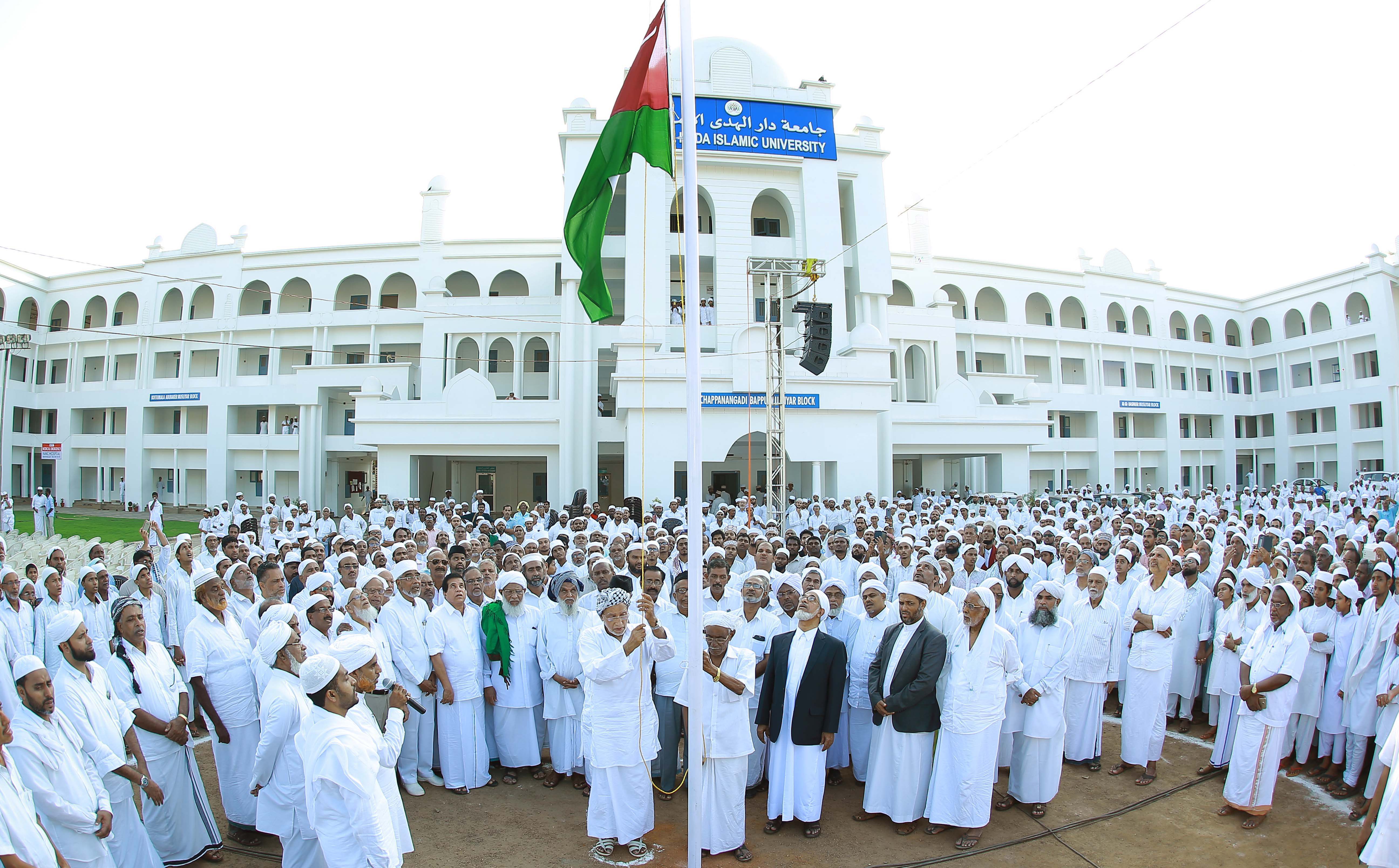
The journey of Darul Huda Islamic University (DHIU), from its modest beginnings with limited resources to becoming a globally acclaimed centre of excellence in education and community development, is nothing short of extraordinary. This exceptional educational system emerged during a turbulent period when attempts were made globally to relevantize the Islamic knowledge and education to face the challenges of modernity and westernization in the Muslim countries. Spearheaded by the visionaries like Syed Naqib al-Attas, one such movement was known for its attempt 'Islamize the knowledge and resulted in the establishment of universities like International Islamic University of Malaysia (IIUM). Although Darul Huda is not directly linked to such a global movement, it was also the call of the time to tackle the arduous challenges of the period that resulted in its foundation.
MM Basheeer Musliyar, CH Haidaroos Musliyar and Dr. U. Bapputti Haji were not some western-educated intellectuals coming back to the pathetic realities of their homelands, rather they were the real 'organic intellectuals' who keenly recognized the pressing need for a community of intellectuals equipped with traditional education and secular training, transcending the linguistic boundaries of Kerala. What began as an ambitious idea soon transformed into a cornerstone of educational excellence, proving that "Great things often have small beginnings."
The establishment of Darul Huda was far from a simple task, as it was not just another educational institution. Introducing an integrated education system rooted in traditional Islamic values while incorporating timely pedagogical reforms was a groundbreaking concept for Kerala's conservative Muslim community. So, the founders of Darul Huda had to navigate unchartered waters to turn this innovative vision into reality. Thanks to the unwavering dedication and collaborative efforts of the trio and the visionary pioneers of the Sunni Mahallu Federation, a revolutionary educational model emerged. This "Darul Huda model," originating from South India, not only set a new benchmark for integrated learning but also became a beacon of inspiration for generations to come.
Darul Huda's pedagogical system encompasses a comprehensive structure of lengthy 12 years of rigorous education, including Secondary and Senior Secondary education, six departments at the Degree level, ten departments in Postgraduate studies, as well as its various governing bodies. In 1999, the university took a significant step by establishing a national institute dedicated to non-Keralite students, reflecting its inclusive vision. The farsighted leadership, driven by the ambition to decentralize and amplify empowerment activities across various states, laid the foundation for the establishment of off-campus centres in regions such as Northern Karnataka, Assam, Andhra Pradesh, Bengal and Maharashtra, marking yet another milestone in Darul Huda's mission to broaden its educational and cultural reach.
Recognizing the pivotal role women play in social development, the Zahrawiyya and Mahdiyya programs focus on fostering moral growth and enhancing religious discipline among women. Furthermore, opportunities for understanding Islam, transcending barriers of age and gender, are thoughtfully and creatively structured under the initiative of Centre for Public Education and Training (CPET), ensuring inclusive access to knowledge and empowerment for all.
DHIU's programs range from foundational Islamic studies to advanced research in theology, linguistics, and social sciences. The commitment of the institution to all-round graduates is evident in its emphasis on critical thinking, ethical reasoning, and practical application of knowledge. It is this integrated model that has enabled DHIU to prepare students who excel both as scholars of Islam and as contributors to the broader global community.
Being an Islamic University, Darul Huda places great emphasis on the holistic development of its students, encouraging them to excel not only in academics but also in extracurricular activities. One of the standout initiatives in this regard is the National Art Fest named as "Sibaq", organized in the break of two years for all students across the university's affiliated institutes. This vibrant event serves as an excellent platform for students to showcase their creativity, skills, and talents in various forms of art. Whether it's religious or secular arts, the Art Fest allows students to express themselves, fostering an environment of innovation and self-discovery. By providing such opportunities, Darul Huda ensures that its students grow into well-rounded individuals capable of contributing meaningfully to both cultural and academic spheres.
Beyond an Educational Institute
Now with Darul Huda is celebrating its fortieth anniversary, it's significant to reflect the societal impact it made since its elevation to a university in 2009. When it comes to societal contribution, it would be inappropriate to look beyond Hadia (Hudawis' Association for Devoted Islamic Activities), the alumni organization of Darul Huda Islamic University. But as the union prefers to be called itself, it's more than an alumni association as it is arguably the most constructive union of graduates in Kerala with its unique vision, coordinated action plan and impactful working strategy.
All programs and initiatives under Hadia are meticulously coordinated through the Hadia Centre for Social Excellence (CSE), established in 2015 and located in Panakkad. This dedicated centre of excellence, initiated by Hadia, plays a pivotal role in the upliftment of minorities across India. CSE firmly believes in education as both a catalyst for growth and a solution to the profound challenges faced by these communities. The centre is committed to advancing research and academic studies, taking proactive steps in publishing, actively engaging with media, executing impactful social empowerment projects, developing essential human resources, and fostering the restoration of mental health within society. With a vision to become a beacon of positive transformation, CSE aims to address the complex challenges confronting minorities in India through a holistic, integrated approach. By remaining steadfast in its mission, CSE seeks to make a lasting impact, nurturing growth, empowerment, and overall societal well-being.
As the social and political context of the country demands today, Hadia's National Education Project is extensively focused on the cultural empowerment of underprivileged communities in northern Indian villages with the primary objective of ensuring every Muslim child receives fundamental religious education before adulthood. Launching in 2012 at Darul Huda Andhra Centre, Punkanur, Hadia's National Education Project has established 2500 Hadiya Moral Schools across 14 states impacting the lives of 89,740 students with a dedicated team consisting of 1218 teachers, 56 muftis, and 24 coordinators. Beyond moral schools, Hadia is committed to establish model mahalls and the empowerment of madrassas, contributing to a comprehensive educational strategy.
Drawing inspirations from Hadia's National Education project, Qurtuba Foundation is the recent and evolutionary development which is grounded in values and guided by pursuits of knowledge. As a registered Section 8, not-for-profit organization the Qurtuba Institute of Academic Excellence stands as a symbol of academic distinction and holistic character development. With its unique 10-year program commencing from the 6th grade, the institute places a strong emphasis on language proficiency, moral values, artistic expression, and professional courses. This approach aims to cultivate well-rounded graduates equipped to make meaningful contributions across diverse fields.
Under the umbrella of Qurtuba, Shariat Colleges have significantly enhanced the academic standards of Madrasas in the Seemanchal Region. Offering a structured academic framework, these colleges prepare graduates for careers in teaching, Islamic learning centre administration, leadership in prayer services, and advanced studies in Islamic jurisprudence. This comprehensive program opens doors for students to excel in both spiritual and professional domains.
The Kafil Edu Village initiative is another remarkable program under the foundation which addresses the critical needs of orphans in the Seemanchal Region, providing them with care, education, and accommodation from ages 3 to 18. Younger children are nurtured by widows appointed as caregivers, while older orphans are enrolled in public schools, with all expenses covered by the Kafil Office. This initiative ensures these children are supported and empowered to build promising futures.
In its 40 years of existence, Darul Huda Islamic University has carved a distinctive niche in the realm of education, advancing rapidly toward its goal of transforming the educational landscape. The institution has consistently implemented innovative practices, not only in its academic methodologies but also in its physical and technological infrastructure. In 2009, Darul Huda achieved the significant milestone of being upgraded to a university. Subsequently, it became a member of the League of Islamic Universities in Cairo and the Federation of Universities of the Islamic World in Morocco.
Darul Huda has established academic partnerships with over 12 international Islamic universities, including the International Islamic University Malaysia, Al-Qarawiyyin University in Morocco, Sultan Sharif Ali Islamic University in Brunei, Ankara University in Turkey, and the Islamic University of Rotterdam in the Netherlands. Additionally, prominent national universities such as Jamia Millia Islamia, Jawaharlal Nehru University (JNU), and Maulana Azad National Urdu University have recognized and validated Darul Huda's curriculum, further enhancing its credibility and reach.
To bring it all together, Darul Huda Islamic University's remarkable journey over the past forty years stands as a testament to its unwavering commitment to education, spiritual growth, and societal development. The university's unique blend of traditional Islamic teachings and contemporary academic disciplines has empowered its students to navigate the complexities of modern life while remaining deeply rooted in their faith and values. As Darul Huda embarks on the next chapter of its journey, it continues to inspire and pave the way for future generations, remaining steadfast in its mission to nurture minds, foster leadership, and contribute to the betterment of society. Truly, the forty years of fulfilment mark not just a milestone, but a continued promise of growth, excellence, and impact for years to come.