Bridging Tradition and Modernity: A Holistic Approach to Education

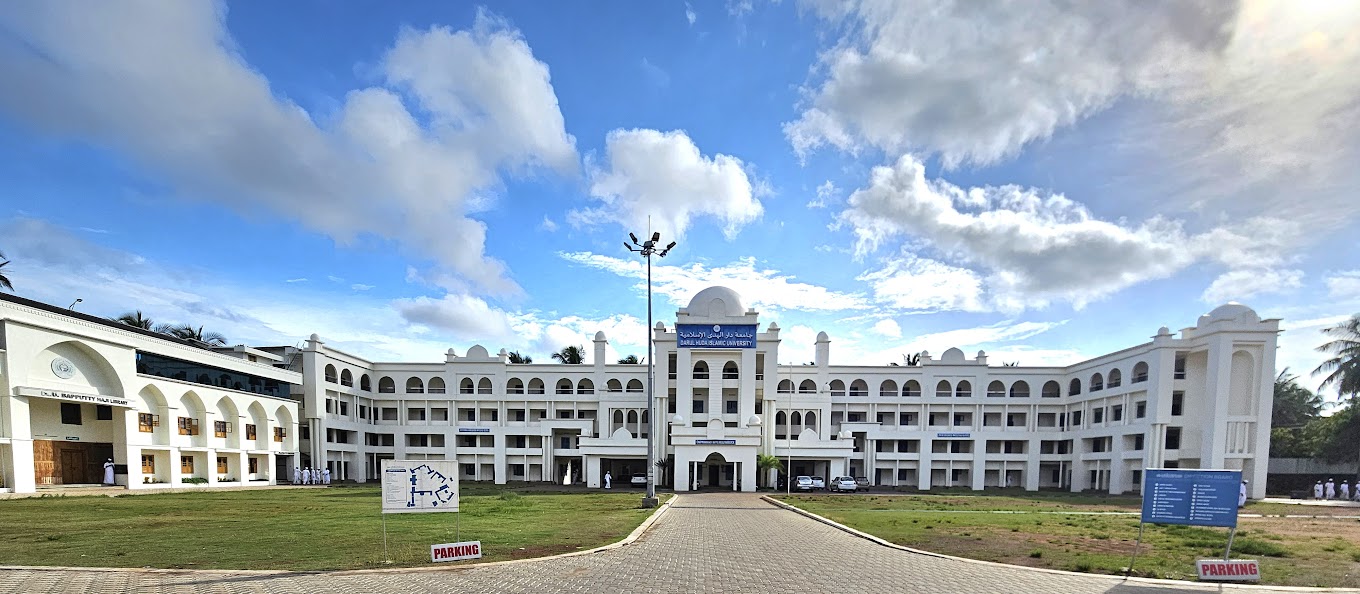
The education model implemented by Darul Huda Islamic University represents a significant innovation in the traditional Islamic education system practiced in Kerala, particularly during the colonial and post-colonial periods. It has redefined the conventional approach by integrating modern educational methodologies and disciplines while maintaining a strong foundation in classical Islamic studies. This reform has made the institution a pivotal example of how traditional Islamic education can adapt to contemporary challenges and societal needs without compromising its core values.
In the early development of Islamic scholarship, knowledge was considered sacred and holistic, regardless of its nature or source. This perspective was rooted in the belief that ultimate knowledge belongs to Almighty Allah, who is the source of all forms of knowledge, whether revealed or rational. Revealed knowledge encompasses the religious texts of the Quran and Hadith, as well as the scholarly endeavours of exegesis and interpretation. However, the subsequent classification of knowledge into revelational and rational created a rupture in the holistic and sacred understanding of knowledge as a unified whole.
The influence of Hellenistic philosophy rendered categorization of religious and material education as different realms of study. Rather the views of Islamic scholarship emphasised the complementary nature of religious and material, revelational and rational knowledge. Imam Al Ghazali after classifying the knowledge to religious and intellectual sciences, he reiterates that the former is complementary to the latter. Religious knowledge provides the framework and direction for using worldly knowledge in a manner that aligns with spiritual and moral goals.
However, the Hellenistic and western secularization has impacted the separation of religious knowledge by revelations from the realm of knowledge and established the legitimacy of sole rational, intellectual, scientific knowledge. This left the revelation knowledge amid crisis of decline and caused the creation of a modern secular educational system, ultimately alien from metaphysics and non-observatory knowledge. A civilizational resistance was essential against this effort. Thereafter newer attempts of Islamization of knowledge came to being rested solely on the world view of Islam.
Traditional Education Model in Kerala
In South West Asia, Muslims known as Mappilas used the Dars system as a means of disseminating knowledge. The Dars was aligned with the masjids, similar to the Ahl al-Suffa system in Madinah during the time of the Prophet. The curriculum in these Dars varied depending on the focus of the scholar. At the primary stage, a holistic approach to knowledge was adopted, incorporating both religious and material subjects. Key syllabi used during that time include the Ponnani, Nizamiyya, and Rahimaniyya syllabi.
The Ponnani syllabus focused on theological studies, while logical and rational studies Maaqulath were not included. This was due to the Makhdoom family's tradition, which was centered on theology, particularly jurisprudence, with influences from Sufi doctrines in education. On the other hand Philosophy and rational science were the core subjects of Nizamiyyah syllabus. Their objective was to make students talented by the strength of Maaquulath. Mishkath was the only Hadeeth text taught in Nizamiyyah way of education.
The Dars-i-Nizamiyya curriculum became the dominant framework for orthodox Indian Muslim religious schools in various forms. It represents a North Indian Muslim contribution to Mappila culture. While the Mappila Muslims adapted a modified version of this syllabus, its core principles continued to guide the training of their community's traditional clergy. Initially aimed at producing scholars (Ulama) and jurists proficient in both theology and reasoning, the syllabus evolved to prioritize religious sciences over time, which some critics argue narrowed its scope. Among the Mappila Muslims of Kerala, the Dars-i-Nizamiyya was adapted to suit local needs while preserving its foundational principles, significantly influencing the region's religious education. Despite critiques of its limitations, this syllabus remains a pivotal framework for traditional Islamic seminaries, and modern reforms seek to reintroduce contemporary sciences to achieve a balanced and holistic approach to education.
The Dars-i-Nizamiyya syllabus, developed by Mulla Nizamuddin Sihalvi in 18th-century Lucknow, became the cornerstone of Islamic education in the Indian subcontinent. Designed to standardize and reform traditional learning, it blended religious sciences such as Quranic exegesis (Tafsir), Hadith studies, and jurisprudence (Fiqh) with rational sciences like logic (Mantiq), philosophy (Hikmah), and mathematics (Ilm al-hisab). The syllabus emphasized Arabic grammar and syntax, Quranic exegesis, Hadith studies, logic, mathematics, and various medieval sciences. It also included jurisprudence, scholastic theology, and Sufism. Over time, variations appeared across different institutions, introducing or removing subjects such as Persian, Urdu, Islamic history, medicine, philosophy, and even English. Not all institutions, however, embraced the inclusion of Sufism.
In Kerala the initial efforts to incorporate secular subjects like mathematics and Malayalam met with strong opposition, as modern education was perceived as un-Islamic. Despite these challenges, the system endured, supported by community contributions and managed by local committees. The Mappila traditionalist clergy play a crucial role in preserving their community's culture through rigid adherence to historical traditions. Rooted in early Islamic education, their training emphasizes Quranic literacy, Arabic instruction, and the religious education of children, fostering a culture resistant to change. Influenced by South Arabian conservatism and shaped by a defensive stance during colonial rule, the clergy perpetuate the principle of taqlid (continuity with the past).
The results of traditionalist clergy training in Mappila culture have been both positive and negative. On the positive side, the long and focused training produces skilled clergy who can effectively lead preaching and teaching, exemplifying sincerity, piety, and dedication. It preserves the continuity of community traditions, maintains the centrality of the Quran, and promotes spiritual values. However, on the negative side, the lack of general knowledge leaves clergy disconnected from the educated laity, making them defensive and ill-equipped to address modern challenges. The training also fosters authoritarianism, prioritizes details over principles, and often results in public disputes among clergy. Furthermore, it breeds suspicion towards secular education and stifles cultural progress, contributing to a sense of stagnation in the community.
Only with post-independence reforms and the educational revolution of the 1960s did significant changes begin to take root, integrating secular education while retaining Islamic traditions. Despite these developments, none of these systems fully adhered to the Islamic conception of knowledge, which integrates material and religious disciplines without division. The tension between tradition and modernity in Mappila culture has sparked a "Great Transition," moving the community from a rigid adherence to the past to a dynamic engagement with the present, seeking further transformation in the future.
Integrated Approach
The transition from the traditional model aimed to address the gaps inherent in the conventional methods of Islamic knowledge dissemination in Kerala. There was a growing need for a more comprehensive, inclusive, and forward-thinking educational pedagogy to tackle the emerging challenges of the contemporary period. Reviving the holistic and comprehensive classification of knowledge in Islam became crucial to equipping scholars to navigate the crises of the modern era. This shift involved integrating traditional teachings with modern sciences such as mathematics, science, philosophy, and linguistics, as a way to facilitate this transition.
The dualistic system of education, incorporating religious and secular studies, in India emerged largely due to colonial influence, particularly under British rule, which introduced a bifurcated education system. Prior to this, madāris during the Muslim rule did not separate religious and secular education, but under British influence, the 'ulama focused primarily on preserving the religious aspects of knowledge. This led to a division between traditional scholars and Muslim intellectuals, with the latter beginning to dismiss their own intellectual heritage rather than integrating it with new ideas. The lack of cooperation between the 'ulama and reformists, combined with narrow perspectives on knowledge, made the integration of religious and secular education nearly impossible.
Meanwhile, modernist Muslims began adopting European models of education, but their efforts were often blind to the philosophical and epistemological challenges of modern secular knowledge. In Kerala, however, the 'ulama responded more creatively, attempting to develop their own Islamic version of modern education rather than opposing change outright. This approach led to the establishment of institutions such as Farook College in 1948 and the formation of the Muslim Education Association (MES) in 1964, which facilitated the gradual spread of modern education among Muslims.
Despite this progress, the traditional system of religious higher education continued in its original form, and the idea of integrating Islamic and modern sciences, especially in madāris, was met with resistance from traditional scholars. Many Indian scholars and intellectuals, including figures like Sir Sayyid Ahmad Khan (1817-1898) have advocated for reforms in the traditional religious education system. They argued that madāris no longer represent the true traditional system of Islamic education, but rather remain as remnants of the Muslim rule period in India. In Kerala, similar reform efforts were undertaken, with movements such as the Dars tradition, the narrow-conventional Dars tradition (including Shariah Colleges), the Arabic college tradition, and Arts and Islamic Courses (AIC), though these were also largely ineffective.
Kerala's Islamic higher education sector is exploring models like Darul Huda, which integrates both modern and Islamic teachings. The educational model adopted by Darul Huda combines Islamic sciences, focusing on revelation and personal purification, with modern human and material sciences. This approach upholds a comprehensive view of knowledge in Islam, enabling students to critically evaluate knowledge produced by colonial and Western powers. The complementary nature of Islamic revelation-based knowledge on modern sciences is evident, as secular disciplines often lack a metaphysical and ontological perspective, promoting a materialistic approach to education. In contrast, Islamic perspectives on the objectives of life discourage excessive reliance on material gains, equipping Muslims with the tools to address the challenges of modernity with new ways of thinking and understanding. Islamic education nurtures both spiritual and worldly knowledge, guiding individuals to fulfill their roles as servants and vicegerents of Allah. Institutions must focus on the core structures of the Islamic worldview—faith, knowledge, virtue, psycho-social, and civilization—while adapting to contemporary needs. By doing so, they can uphold their authentic principles while preparing students for modern challenges.