The Significance of Madrasa in Kerala
.jpg)
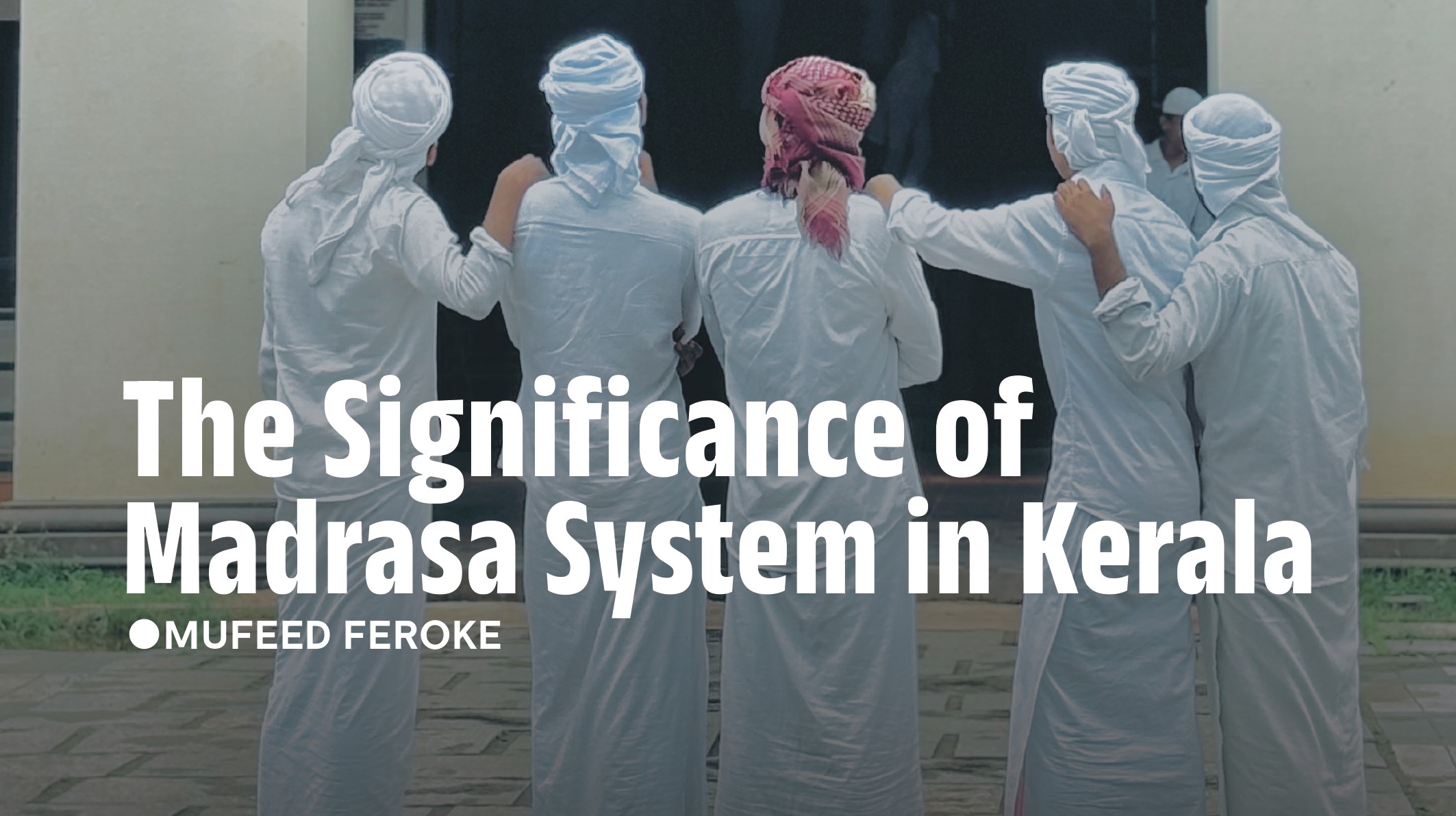
The Madrasa system in Kerala is a well-established and effective educational institution that plays a crucial role in imparting basic religious education to the younger generation. With its clearly defined aims and objectives, structured curriculum, syllabus, and necessary tools, it ensures a smooth and comprehensive educational experience. Notably, this system is designed to allow students to pursue religious studies alongside their modern education in mainstream schools. As a result, nearly every Muslim child in Kerala undergoes madrasa education by the time they reach adolescence, highlighting its significance in the community.
One of the fundamental principles of Islam is acquiring and sharing knowledge, which forms the core of Islamic civilization. Muslims across the globe have established various educational institutions at primary and higher levels to educate their communities on the essential principles of the religion and produce knowledgeable scholars. Education, according to Islam, is a powerful tool for resulting positive social change and dispelling ignorance and superstitions. The advent of Islam revolutionized the world and laid the foundation for a glorious civilization and culture. In Kerala, the Madrasa education system brought about significant social change. While the structural form of Madrasas we see today did not exist during the time of Prophet Muhammad (PBUH), a strong tradition of learning and teaching was already present.
Kerala holds historical significance as a land where the initial spread of Islam in India took place. The system of Islamic education likely began alongside the establishment of the first few mosques in Kerala. Over a period of a thousand years, this system evolved, surviving despite a century marked by a greater emphasis on modern education.
Today, the Madrasa system in Kerala thrives, incorporates new trends, and also enables Muslim children to attend both religious and regular schools simultaneously. This unique feature sets the Muslims of Kerala apart from their counterparts in India, as they have successfully fashioned an education system that embraces both religious and secular knowledge.
Kerala proudly boasts the highest literacy rate in India, and the Muslim community in Kerala stands out as the most well-educated Muslim population in the country. This achievement is attributed, in part, to the extensive network of educational institutions established by community leaders across the state. These institutions, including Madrasas and other schools, have played a vital role in advancing education among Muslims in Kerala.
Within the Malabar region of Kerala, there are five distinct patterns of religious educational provisions for Muslims. First is the “Othupalli,” a single-teacher school system set up adjacent to mosques. Additionally
There are “Palli dars,” educational establishments that have existed since the advent of Islam and continued to operate till today. Madrasas operate parallel to the general school system, providing education from primary to senior secondary levels. Boarding Madrasas offer residential facilities, combining Madrasa education with regular schooling for a fee covering education, boarding, and food. Lastly, Arabic colleges provide education in both Islamic and secular subjects at degree and postgraduate levels in residential campuses.
The constitution of the Madrasa Board ensures the proper functioning and administration of Madrasas in Kerala. This governing body plays a critical role in formulating policies, monitoring the quality of education, and ensuring the overall development of Madrasa students.
In brief, the Madrasa system in Kerala serves as an efficient and integral educational platform for imparting religious knowledge to the Muslim youth. Its harmonious integration with modern education allows students to excel in both domains. With its rich history, impactful social transformation, and contribution to the high literacy rate among Muslims in Kerala, the Madrasa system stands as a testament to the power of education and the importance of fostering friendship and understanding among communities