Ponies, Pearls and Power: Tombstones and Inscriptions as Sources of Merchant Rulers in South India
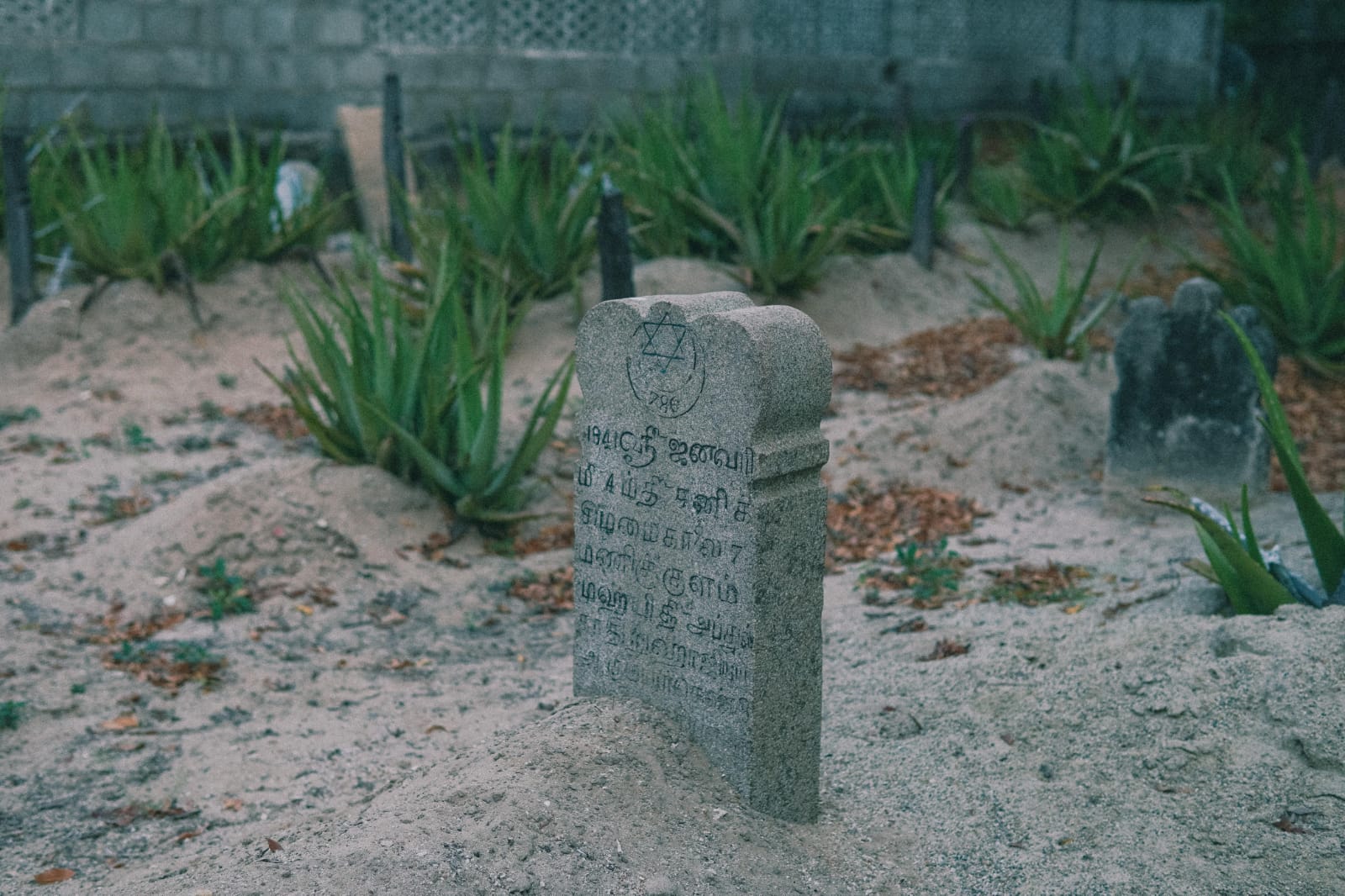
Kayalpattinam, a historic port town on the southeast Coromandel Coast of Tamil Nadu, was a prominent center of Islamic learning and Indian Ocean trade from the medieval period onward. Yet it has not received the same scholarly attention as the ports of the Malabar Coast on the opposite side of peninsular India. Important Malabar entrepots are well attested in medieval travelogues and chronicles, whereas Kayalpattinam's historical footprints have been comparatively understudied despite frequent mentions in pre-modern sources suggesting its role as a crucial link connecting the eastern and western Indian Ocean worlds. This imbalance owes partly to the nature of available evidence: Kayalpattinam did not experience sustained Muslim dynastic rule, and thus its material-Islamic heritage (mosques, tombstones, inscriptions) has often been sidelined in favor of textual accounts produced under foreign or colonial patronage. As historian Elizabeth Lambourn observes (in the context of Southeast Asia), Islamic material culture in coastal South/Southeast Asia is too often treated merely as an adjunct to textual history rather than as a rich source in its own right.
Graves, graveyards and inscriptions, however, can serve as invaluable historical records for Indian Ocean Islam. In his influential study The Graves of Tarim, Engseng Ho argues that tombstones and burial sites function as "methodological entry points" into the discourses of mobility that defined diasporic Muslim communities, being "rich in terminologies and teleologies" of travel and migration. He emphasizes that graves and epitaphs are "meaningful semiotic complexes"- sites that manifest "the idea of absence," a poignant signifier of those who left home and that venerating or narrating these burial sites became a way of sustaining mobility across generations. In other words, the genealogies constructed around graves enabled far-flung Muslim diasporas to remember and legitimize their dispersed presence.
Drawing on this insight, the present study examines how tombstone inscriptions and related epigraphic evidence from Kayalpattinam can illuminate the hidden history of a merchant family that effectively ruled the region in the late 13th-early 14th century. By integrating material evidence with Persian, Chinese and European historical sources, we aim to reconstruct the career of the Tībī merchant-brothers- Jamal al-Din and Taqī al-Din who leveraged trade wealth ("ponies and pearls") into political power, thus challenging the conventional narrative that Muslim sovereignty in South India arose only from northern conquests.
In his account of Arabic, Persian and Urdu inscriptions of South India, Ziadduin Desai has listed a few inscriptions, tombstones, headstones from Kayalpattinam, a prominent centre of Islamic learning in the Coromandel coast of Tamil Nadu.In his catalogue, he mentions twenty two inscriptions (all of them in Arabic) of which, three of them are of this brief article's concern.
Both Malabar and Ma'bar (The general name for the coastal stretch on the Arabian Sea and the Bay of Bengal respectively) has been long viewed as sites of Islamic textual production. As places of long-historical Arab interaction, both these regions have enjoyed literary production in Arabic and Arabicized vernacular. Arabic-Malayalam and Arabu-Tamil, locally called Arabi Malayalam and Arwi were vehicles for significant amounts of literature spanning across different genres including history, poetry and theology.
The academic scholarship on these regions have focused majorly on these respective literary traditions including their surveys, performative realms and the aspects of community formation intertwined with them. Unlike most other major Islamic centres of learning in South Asia, most of the literature was produced not under royal patronage. Thus, the textual accounts have always found an upper hand over the material evidence when it comes to the consideration of sources about the Muslim history of the region. The material history of Islam in the region has been either sidelined or looked at only as another form of textual source.
Despite the brief geographical stretches ruled by Arakkal in Malabar and Madurai Sultanate in the Ma'bar region, both regions were under the rule of Hindu sovereigns. Therefore, these coastal geographies were often considered as regions outside the ambit of conventional Muslim rule. As regions without Muslim rule and patronage, they were also neglected when it came to the wealth of inscriptions.This might be also one of the reasons why Ziadduin Desai, who did an extensive survey of Arabic, Urdu and Persian inscriptions, considers Kerala as one of the 'most inadequately represented provinces'. For him, the reason why the state does not have any Urdu or Persian inscriptions is because of the fact that the region was so far from the 'centre of Muslim authority'. He also attributes this to the nature of inscriptions here-which were mostly done on wood rather than stone.In the case of Tamil Nadu, he observes that there are fairly a good number of inscriptions, thanks to the brief rule in Madurai.
In his 'Concise History of Kayalpattinam', R.S Abdul Latheef, a prominent local historian of the town, locates the Muslim history of the town in three migrations. The first one, according to him, happened in 642.C.E, the second in 842 C.E under the leadership of Muhammad Khalji from Cairo in Egypt and the third, and the final, in 1284.C.E under the head of Sultan Jamal al-Din. According to him, Jamal al-Din was a 'business magnate, statesman, and a famous ruler of Pandiya Kingdom'. Sultan Jamal al-Din, in Latif's observation, had started renovating the Periya Palli ('Big Mosque') which was initially built by Muhammad Khalji, eventually completed by his son in 1329 A.D. In addition to that, Latif also claims that Sultan Jamal al-Din ruled the Pandiya Kingdom for 'a short period', after the death of Sundara Pandiyan in 1293 A.D. Latif claims that the renovation was completed by Sultan Jamal al-Din based on the inscription on the lintel of the Masjid.
In Desai's account, this inscription is attributed back to H.737, or A.D 1336-7. The Annual Archeological Report on Indian Epigraphy from 1949-50 records this inscription and its hand, which is naskh. The inscription attributes/assigns the construction of the Jami Masjid to Sultan Jamal al-Din and its completion after the Sultan's death. In Muslim Architecture of South India, art historian Mehrdad Shokoohy provides the transcription of the entire inscription along with its translation. As the original was badly worn out, the present one was said to be 'a copy of the original 14th century inscription'. 
The inscription, In Shokoohy's translation, reads like this: "In the name of God, the most compassionate, the most merciful, the year 737/1336-7. At the date of 737 of the Hijra of the most laudable one, the blessing of God be with him, may he dwell in the highest heaven, this mosque was built as the great jami' in the town of Qa'il by Jamal al-din Sultan Muhammad, and the sultan died before its completion.
His son completed the mosque by the munificent disbursing of jewels (infaq 'asjad). Place them, O God, in paradise and thereupon bestow on them meeting with you and meeting with Muhammad."
Mehrdad Shokoohy initially found the reference puzzling. He noted that no Sultan by the name "Jamal al-Din Muhammad" is known in Indian history. Shokoohy therefore hypothesized that the Arabic text was a misreading, and that it in fact referred to Jalal al-Din Ahsan (misread as "Jamāl"), the first Sultan of Madurai (Ma'bar) who ruled briefly between 1333 and 1338 CE. Jalāl al-Din Ahsan Shāh did indeed found the Madurai Sultanate in 1335, which nominally included Kayalpattinam within its domain, so this explanation would neatly "fit the historical accounts," as Shokoohy observed. However, a major weakness in Shokoohy's theory is that no chronicler mentions any son of Jalal al-Din Ahsan let alone a son who completed a mosque after his father's death. Jalal al-Din's known tenure was also extremely short (he was assassinated in 1339), leaving little time for such a project. Shokoohy speculated that perhaps Ahsan's "son" in the inscription was actually a local governor of Kayal appointed by him, but the evidence for this is scant.
This article argues that it was possibly not a misreading but an actual attribution to Jamal al-Din Ibrāhīm al-Tībī (1232-1306), who was a prominent trader and a merchant ruler of Kish (Qays) island in the Persian Gulf. Jamal al-Din, along with his brother Taqī al-Din had a considerable presence in the early medieval Indian ocean trade from the Persian Gulf to East China. Coming from a prominent merchant family, they cemented their monopoly over trade by associating themselves with many prominent kingdoms and rulers across the Ocean. The Tībī brothers inserted themselves into these networks, leveraging alliances with major powers across the region. They were also the central connecting nodes between the Yuan Dynasty (1260-1368) in China and the Ilkhanids(1260-1335) of Iran. This was also a major watershed moment in world history. The sacking of Abbasid Baghdad and the resultant aggressive expansions of oceanic trade resulted in the formation of "complex political, religious, and commercial networks that linked the Far East to Europe" (Sen, 2006. p.299).

Going back to Shokoohy's reading of the inscription, we can see that fourth line of inscription mentions that 'fa-atamma ibnahu hādhā bi-infāq asjad' or in his translation, 'his son completed the mosque by the munificent disbursing of jewels'. Shokoohy, in an additional footnote, mentions that "asjad' means precious stones and particularly pearls, the use of which he rationalises as an appropriate choice in the pearl fisheries coast. While "asjad' cannot be assumed as an exclusive mention of pearls in classical Arabic lexicon as it is often used to refer to gold in its purest form, there are occasions in which it is also extended to describe precious jewels, including pearls. Pearls are a crucial element in the history of Ma'bar coast, as Shokoohy so observes. But additionally, we can see that pearls were also an important element in the historical emergence of the Tibīs as major trade magnetes in the Indian Ocean world. Though coming from a traditional family of potters- who used to sell clay drinking vessels in Wasit, Jamal al-Din, had left his traditional occupation to learn how to pierce pearls (thaqb al-lu'lu') in Baghdad which led him to start his career as a pearl merchant. In his account on the travels of Tībī across Asia, Matanya Gill historically locates Tībī in his knack to tap into the vast and wide network of pearl trade across the Indian Ocean and attributes his initial success in Mongol Baghdad to this venture, before climbing his way up to the court.